
Henan LED street lights, Zhengzhou sign poles, Zhengzhou solar street lights, octagonal poles
Misconceptions about installing solar street lights
Category: Company News
Nov 16,2021
When selecting a site, solar street lights should avoid being surrounded by trees and large buildings. In some areas to the south, trees tend to be lush and large due to ample rainfall and sunlight, which leads to faster growth. They have a significant impact on the power generation of solar panels; tests show that when the solar panel is shaded by one-fifth, the charging current drops by 90%. The shading from trees can sometimes be even more severe.
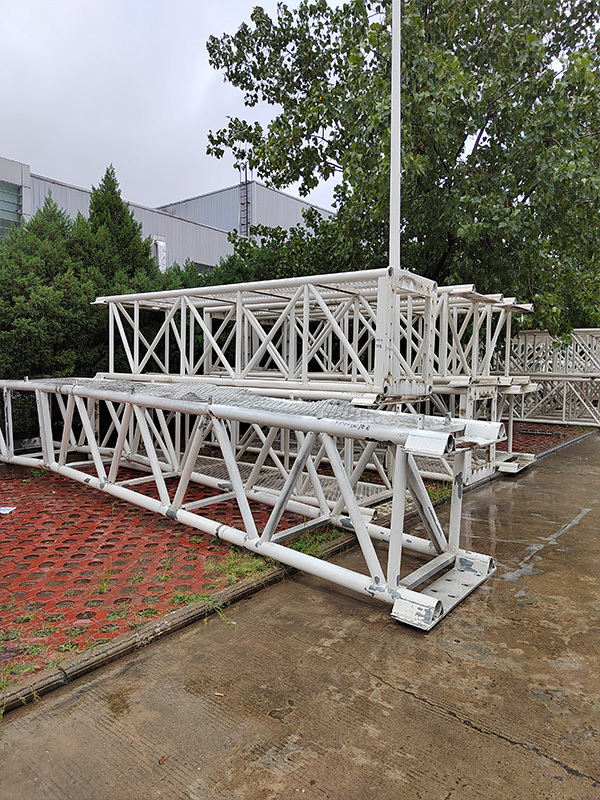
The indirect impact of shading from trees is damage to the battery's lifespan. Batteries can easily experience a discharge phenomenon; if this occurs daily, the battery's lifespan can decrease by at least 70% (for gel batteries) and over 20% for lithium batteries within a year. Additionally, the brightness of the lights at night may be insufficient, leading to inadequate illumination time, and during continuous rainy days, the lights may not turn on for several days. All these situations can diminish users' positive impressions of solar street lights.
In reality, this may not be significantly related to the solar street lights themselves, nor does it concern quality or the manufacturer's integrity; rather, it is about not choosing the right installation location. As the saying goes, location is key. Location refers to having good weather with few rainy days; it also means being in an open area without obstructions and having good average annual sunlight. The human factor likely refers to the professionalism of the installation personnel and sufficient capacity of the manufacturer's configuration. When installing around buildings, one must consider that morning sunlight may reach the solar panels, but in the afternoon, they might be covered by the building's shadow. This would greatly reduce charging efficiency. In such cases, it is necessary to reduce the discharge amount of the solar street light by 50% to maintain the battery's charge within a healthy range.
The orientation of the solar panels is also an important factor to consider. We are in the Northern Hemisphere, so solar panels should face south; due to sunlight angles, it is generally recommended to tilt them slightly westward by 20 degrees. The tilt angle of solar panels is generally suggested to be slightly larger in northern regions, considering that winter snow and rain can cover them; a larger angle allows ice and snow to slide off more quickly from the panels, reducing their impact on power generation. It can also be noted that northern areas tend to have more dust, and rain can better wash away dust from the solar panels.
Related News
Jul 22,2024
Jul 02,2024
Jun 22,2024
Jun 12,2024
Jun 02,2024
Contact Information
Tel:+86-371-62650998
Mobile Phone:+86-13623854456 / +86-18637168316
WeChat: ar13623854456
Address: 300 m west of intersection of Beijing-Hong Kong line and G107 in Lihe Town, Xinzheng City, Henan Province


Scan the code